OpenAI deployed Images 2.6 to provide automated animated graphics generation across its conversational platforms. The rollout allows individuals to produce looping animations using simple text descriptions or uploaded pictures. According to reporting by Engadget, the system was released on November 4, 2026, for ChatGPT, Codex, and developer interfaces.
Faster Output and Processing Upgrades in Images 2.6
The deployment of Images 2.6 delivers measurable speed improvements compared to older visual systems. OpenAI stated that the upgraded architecture produces pictures approximately 50 percent faster than the earlier release. This operational acceleration helps users test different visual ideas without long waiting intervals between attempts.
In addition, the underlying technology supports high everyday demand across global networks. OpenAI stated that users create more than 500 million pictures every day through its various conversational interfaces. The addition of motion files brings another dimension to this daily production volume.
Editing Controls and Frame Adjustments
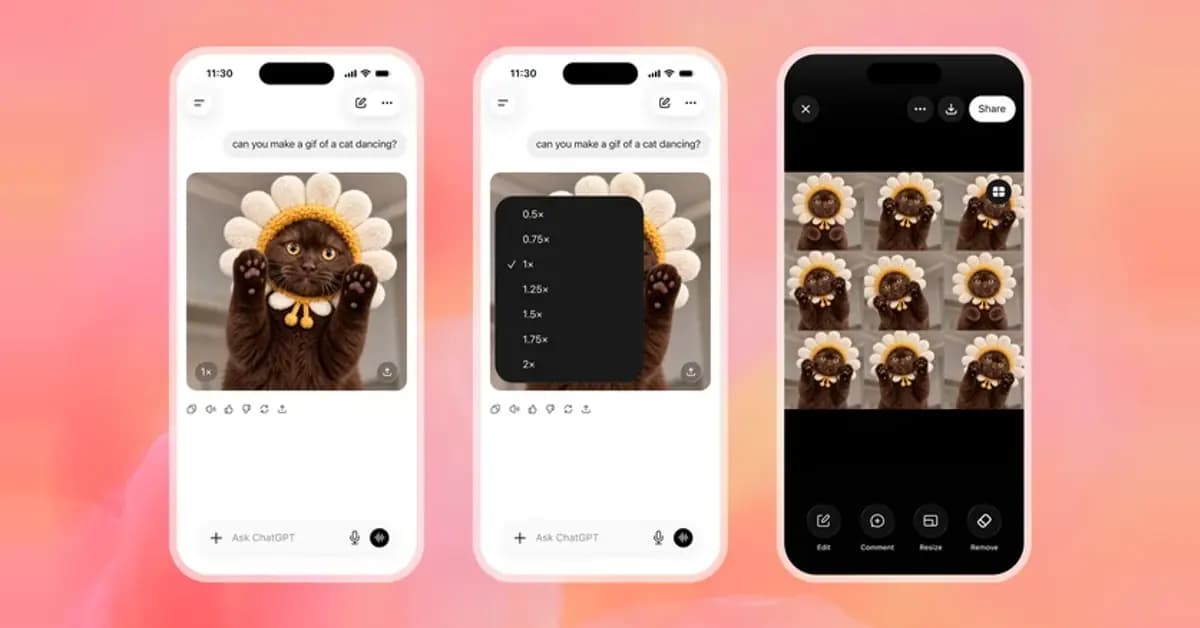
Creating a short animation starts by entering a descriptive request into the conversation field. For example, a user can ask for an animal action sequence or an animated scene. Once the file appears, the platform provides direct editing tools to refine the visual output.
Users can modify playback rates by clicking a speed indicator located at the corner of the player. Options allow the animation to loop at standard or alternate intervals. Furthermore, selecting the editing option opens a text field where users can describe specific visual alterations to the finished clip.
A dedicated sheet view displays the individual static frames that make up the complete animation. This breakdown lets people inspect specific segments, add comments, and apply targeted markups. Once adjustments are complete, the file can be saved directly or shared across social media channels.
Visual References and Developer Model Choices
The software also supports initial photo uploads to guide the generation process. Creators can supply simple line drawings or basic sketches, such as an outline of an owl, to serve as the foundation for movement. These reference pictures can be stored and tagged for future sessions involving specific characters, pets, or individuals.
For software developers using the external interface, OpenAI added selectable model tiers named Flare and Sunburst. These options permit teams to balance rendering speed, fine detail, and output consistency based on their technical criteria. The integration benefits third-party software connecting with modern artificial intelligence pipelines.
Availability Across Subscription Levels
OpenAI integrated Images 2.6 across its primary interfaces without requiring a paid tier for entry. Free users can access the creation tools immediately through the standard web and mobile applications. However, subscription tiers continue to govern the total volume of generations an account can request during a billing cycle.
Consequently, the update expands creative possibilities within productivity and entertainment software. Users can now build custom reaction clips directly inside their regular workflow rather than searching external repositories. These capabilities represent continued development in everyday apps that rely on visual models.