
AI-generated illustration
Developers tracking new AI developer tools saw notable shifts in models, autonomous agents, and enterprise hardware infrastructure today. Technology firms rolled out software improvements alongside high-bandwidth networking silicon to support heavy computational tasks across artificial intelligence deployments.
Core Model Updates and AI Developer Tools
Perplexity introduced its Graphify skill to Computer to help developers map and inspect codebases directly. The company also allocated 5,000 complimentary credits per user for testing the feature, per confirmation on X.
Meanwhile, joint research from Perplexity and NVIDIA detailed the JOLT post-training method. The research paper demonstrated matched MATH benchmark accuracy while processing 6.5 times fewer training tokens than GRPO, according to the research summary shared on X.
Additionally, Anthropic established a dated versioning system for its models by releasing the 2026-10-21 Claude API edition. Development teams can build on this dated release schedule while retaining support for the legacy 2023-06-01 API format, as stated on X.
Autonomous Agent Infrastructure
Vercel published durable-harness adapters designed to sustain agent execution through runtime disruptions and crashes. The open software adapters allow systems like Pi, OpenCode, Codex, and Claude Code to maintain continuity across apps for hours or months, according to the announcement on X.
OpenAI introduced a 12-hour prompt caching window to assist persistent autonomous systems. This API update preserves shared instructions, tool definitions, and contextual memory at reduced cache rates across extended intervals, as documented on X.
Furthermore, NVIDIA unveiled OpenShell to decouple administrative governance from running models in cybersecurity architectures. The design isolates operations using sandboxing, default denial policies, and BlueField hardware controllers across enterprise deployments, as detailed on X.
Hardware Acceleration and Compute Clusters
Astera Labs conducted connectivity demonstrations for Aries 7 over copper cables and optical PCIe connections. The demonstration accompanied an expanded PCIe 7 lineup featuring retimers, redrivers, optical drivers, and optical transimpedance amplifiers, as shown on X.
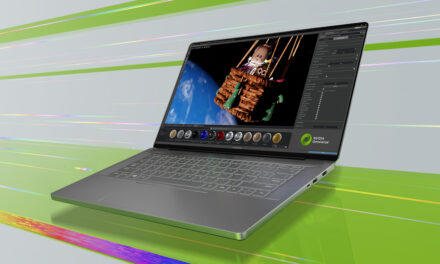
Concurrently, Hetzner expanded its data center offerings in computers by presenting the GEX430 dedicated server platform. The configuration combines four NVIDIA RTX Pro 6000 Blackwell Max-Q GPUs with 384GB of unified GDDR7 ECC memory to manage demanding AI developer tools and training workflows, as announced on X.
Industry Adoption Outlook
These technical releases collectively lower inference overhead, extend runtime persistence, and strengthen data center throughput. Organizations deploying modern AI developer tools can utilize these combined software protocols and hardware solutions to stabilize long-running services across diverse enterprise environments.