
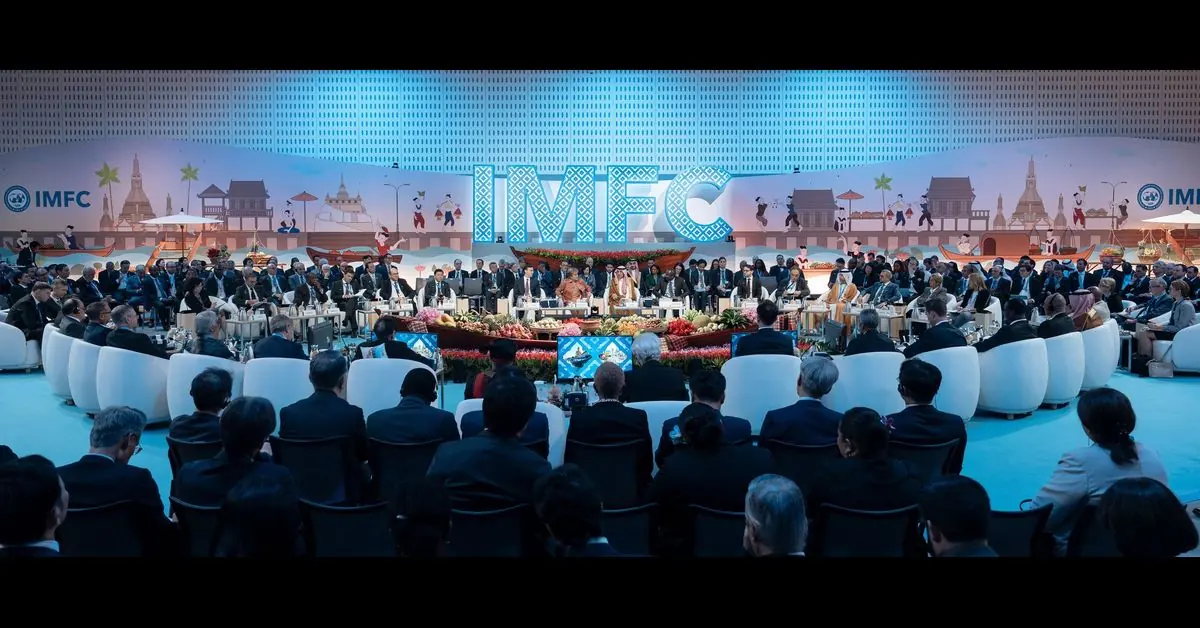
Discussions regarding the IMFC global economy assessment concluded on October 17, 2026, during the meeting in Bangkok, Thailand. Committee members agreed that international markets have managed recent shocks better than initial projections indicated. However, erosion of financial buffers and active conflicts present serious risks to continued stability. The committee formally extended the term of Minister Aljadaan as Chair for an additional year, commending Saudi Arabia for its steady leadership of the body.
Resilience Factors for the IMFC Global Economy
While economic activity has shown resilience, member states noted that persistent wars continue to cause significant economic losses. Disrupted supply networks and rising trade disputes create ongoing price pressures worldwide. In contrast, fast progress in artificial intelligence systems has supported international investments and cross-border trade, offering potential productivity gains across various industries.
Vulnerabilities remain unevenly distributed across international markets. Low-income nations and fragile territories face increasing risks of trailing behind stronger counterparts. Escalating conflicts could disrupt essential shipping passages, worsen energy security, and drive up commodity costs for vulnerable populations.
Digital Safeguards and Technological Changes
The assembly welcomed the Bangkok Blueprint, an international initiative established to strengthen digital finance protections. Committee members highlighted the necessity of greater cybersecurity defenses to combat digital fraud across financial platforms. They agreed to support private enterprise by adopting computing systems safely, ensuring that productivity advantages are distributed equitably without multiplying market vulnerabilities.
Central banks affirmed their commitment to achieving price stability through clear, data-directed monetary policies. The committee noted that central bank autonomy remains a core element for keeping inflation expectations anchored during volatile market periods.
Sovereign Debt and International Financial Cooperation
Addressing public debt pressures emerged as a primary focus during the committee sessions. Members urged swifter implementation of debt restructuring under the Common Framework to support developing economies facing acute debt distress. Closer cooperation between the International Monetary Fund and the World Bank Group through the three-pillar approach was emphasized to assist low-income states.
Members also pushed for greater transparency from all lending parties, including private creditors holding sovereign obligations. Financial assurances for the Poverty Reduction and Growth Trust remain a crucial component in maintaining self-sustained lending capacities for eligible nations requiring immediate support.
Governance Reforms and Future Outlook
The committee reiterated its support for quota reforms governed by the Diriyah Guiding Principles. Members reviewed progress on the 16th General Review of Quotas, urging rapid domestic approvals across national legislatures to finalize the resource expansions. These policies directly impact the economy of member states by providing a reliable financial safety net during systemic shocks.
The body endorsed internal modernizations within the Fund, encouraging the careful internal use of new computational tools to improve risk assessments. Furthermore, members supported expanding female representation across leadership positions on the Executive Board. The next meeting of the committee is scheduled to convene during April 2027 in Washington, D.C.