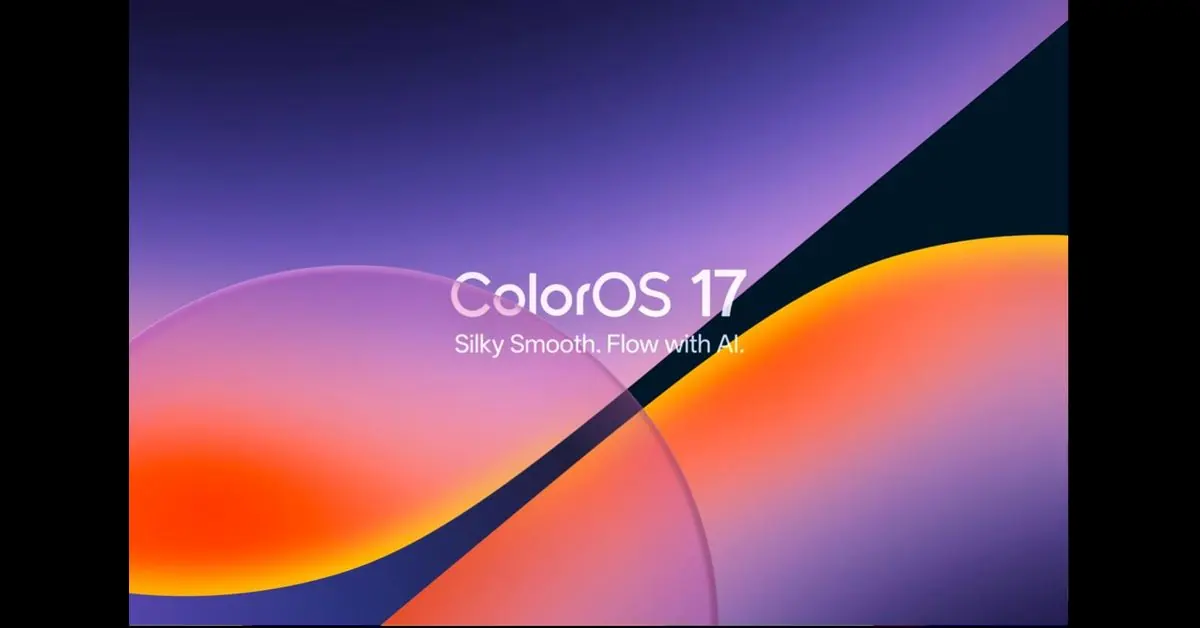
OPPO ColorOS 17 officially debuted on October 13 in Riyadh as the manufacturer revealed its latest mobile operating system update. The new release introduces updated visual elements, deeper agentic artificial intelligence capabilities, and architectural adjustments designed to maintain device responsiveness over extended periods. In addition, the software will make its international hardware debut on the upcoming Find X10 Series before arriving on other compatible smartphones.
Luminous Rendering and Unified Architecture
The updated interface centers on what the brand designates as Living Flow Design, combining softer visual translucency with reactive animations. Buttons and menus exhibit dynamic deformation during screen taps, delivering visual feedback instead of rigid mechanical transitions. Meanwhile, fluid animations allow system panels to merge smoothly across various states on the screen.
Underneath the surface, the company unified its graphics pipeline through the Luminous Rendering Engine to reduce computing overhead. Specifically, this structure lowers rendering workloads by up to 30% and curbs associated memory consumption by up to 25% during demanding scenarios. Consequently, devices running the software experience less strain when rendering intensive graphics.
Performance Benchmarks in OPPO ColorOS 17
Beyond visual changes, the operating system incorporates an upgraded Laminar Flow Engine that schedules device tasks across foreground and background states. As a result, application launch stability improves by 55%, while gallery thumbnails load up to 50% faster on an initial launch compared to the prior version. Furthermore, the scheduler maintains 25% more concurrent active background applications during heavy multitasking on modern mobile devices.
Durability testing simulating six years of hardware usage demonstrated that the operating system retains over 90% of its initial responsiveness. Notably, the phone maintained this benchmark even when internal storage reached 90% capacity during continuous simulated workloads.
Agentic Features Across Daily Tasks
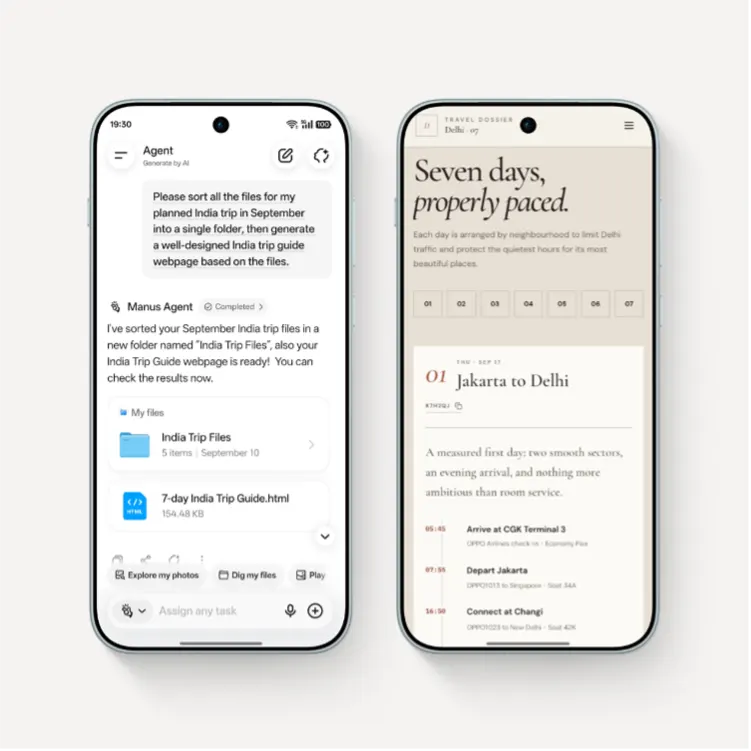
The platform significantly expands on-device automation using artificial intelligence through a feature called AI Mind Pilot. In its Agent Mode, the tool searches local device storage, renames scattered documents based on dates, and compiles saved travel notes into structured itineraries. Similarly, an AI Photo Agent accepts natural language prompts or reference pictures to adjust scene color palettes without altering underlying image composition.
Meanwhile, the system consolidates visual recognition under a unified tool named OSee. Through a single camera shutter press, users can trigger text translation, nutritional lookups, and document scanning without switching between separate utilities. Additionally, the proactive assistant AI Mind Suggest delivers schedule cards, departure reminders, and automated media suggestions based on user context.